PTFE Machining Parts Manufacturer for Balls, Rods, Rings, and Seats
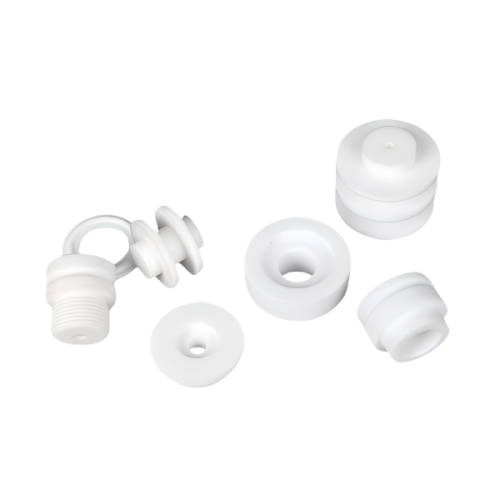
Hengshui Dongshu Precision Co., Ltd. (DSP Sealing) is a PTFE machining parts manufacturer based in Hengshui, Hebei. We turn and mill PTFE balls, rods, rings, seats, and other parts in our own factory, either in standard sizes or to your drawing. If a part is not covered by a catalog size, send us the drawing, and we will quote it.
What We Make from PTFE
Our PTFE range includes:
PTFE Balls
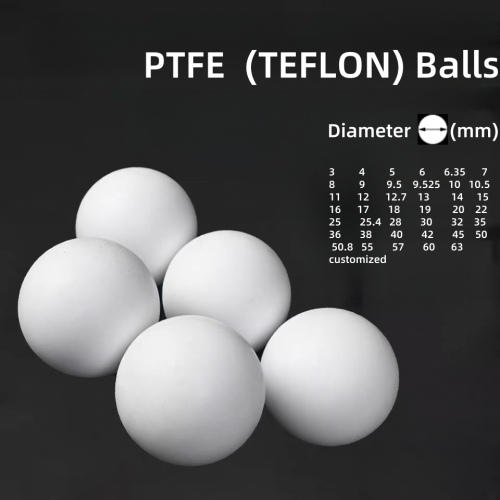
Solid PTFE balls are used where a metal ball would corrode or react with the fluid, for example in check valves and small flow-control valves handling acids, solvents, or other aggressive media. The low friction of PTFE helps the ball move freely, but PTFE is soft and can deform under sustained load.
For valves that stay under pressure for long periods, we usually suggest modified PTFE, which creeps less and is harder. Tell us the ball diameter, the fluid, and the operating pressure and temperature, and we will recommend a grade.
PTFE Rods and Rings
PTFE rods work as finished parts, such as insulators and bushings, or as stock for further machining. We cut rods to length or machine them to your drawing.
As a PTFE ring supplier, we make seal rings, gasket rings, washers, and spacers on CNC machines. Each ring is made to the dimensions and tolerances on your drawing.
PTFE Properties at a Glance
| Property |
Typical Value |
What It Means in Use |
| Operating temperature |
-200°C to +260°C |
Works in cryogenic service and hot process lines. |
| Melting point |
About 327°C |
Well above the service limit, but creep increases as temperature rises. |
| Friction coefficient |
0.04 to 0.10 |
Among the lowest of the engineering plastics. |
| Chemical resistance |
Resists almost all industrial chemicals |
Exceptions include molten alkali metals and elemental fluorine. |
| Electrical insulation |
Good |
Suitable for electrical insulators. |
| Weak point |
Soft, creeps under constant load |
Consider modified PTFE for seats and gaskets that stay compressed. |
These are typical values for standard PTFE. They vary by grade, so ask us for the datasheet that matches your material.
Standard PTFE or Modified PTFE
Choose standard PTFE when chemical resistance and low friction matter most. Choose modified PTFE when the part sits under constant compression, such as a seat or gasket. Compared with standard PTFE, modified PTFE creeps less, is harder, lets less gas and liquid through, machines to cleaner edges, and can be welded. If you are not sure which one fits, tell us the temperature and the media.
Machining and Tolerances
Every part is turned or milled on CNC machines. We work to the tolerances on your drawing and check surface finish on every batch. PTFE is soft and expands noticeably with temperature, so tight tolerances should be agreed together with the conditions the part will be measured under. If you are unsure what tolerance a part needs, tell us how it will be used and we will suggest one.
Why Buy from a PTFE Product Manufacturer
We make the parts ourselves, so there is no trading company between you and the machine.
- Over 10 years of production in Hengshui, Hebei
- 48 CNC machines plus compression mold machines
- Over 1,000 custom mold sizes in stock
- Certificates are shown on our About Us page
- Inspection and material documents available on request
As a PTFE product supplier, we serve buyers in oil and gas, chemical processing, water handling, and automotive, as well as semiconductor, aerospace, and food and beverage. For food-contact parts, tell us before ordering so we can quote the right grade and paperwork.
FAQs
Do you send samples before a bulk order?
Yes. Samples let you check fit and finish first. Sample terms and lead time are confirmed with your quote.
Can you make PTFE parts to my drawing?
Yes. Send a drawing or a sample part with the material and quantity, and we will quote from it.
What are your minimum order quantity and lead time?
Both depend on the material, part size, and quantity. Send us the details, and we will confirm them in your quote.
Are you a manufacturer or a trading company?
We are a manufacturer. The parts are machined in our own factory in Hengshui, Hebei.
What affects the price of a machined PTFE part?
Four things mostly: the material grade, the part size (larger parts use more stock and leave more machining waste), the tolerance and surface finish, and the order quantity.
Which PTFE grade should I choose?
Standard PTFE suits chemical lines and low-friction seals. Modified PTFE suits seats and gaskets under constant compression. We can advise if you send the temperature and media.
Request a Quote
Send your drawing, material, and quantity through the contact form or by email to rita@dspsealing.com, and we will reply with a quote.





 Categories
 Popular Product
